
 Episode 92
· 02:01
This is Brodie with Illinois Extension and I’m here with a new “voice of the wild”
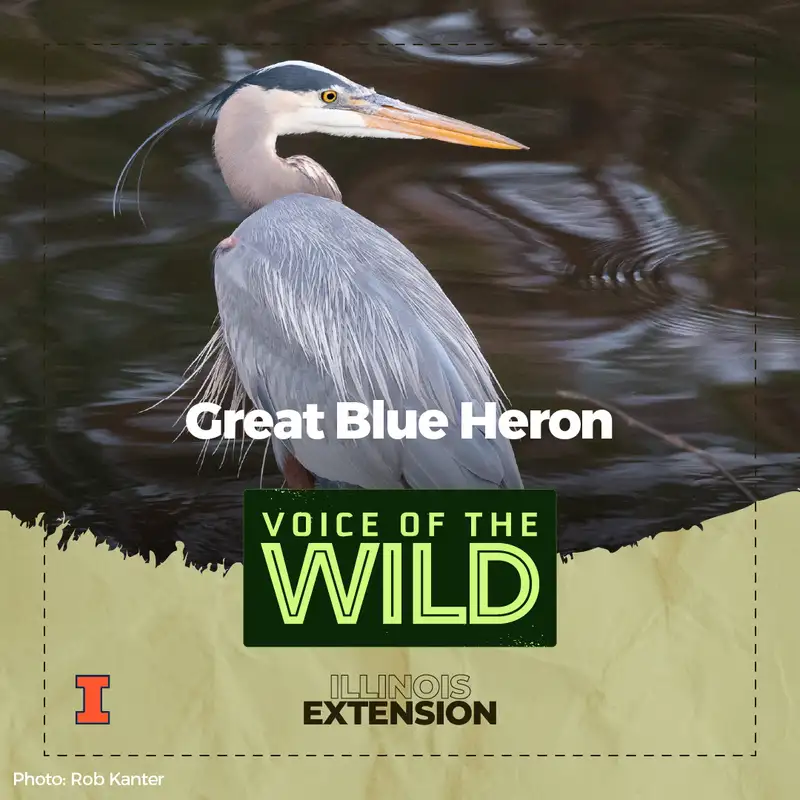
A shy bird who’s just bold enough to live alongside us, but usually not so bold that they’ll tolerate you getting close on your morning run past their favorite neighborhood pond. Sometimes they’ll take off gracefully and fly on slow, measured wingbeats to the other side, Other times you startle them and they’ll leave with a hurried and awkward squawk. This is the great blue heron
Great blues can be recognized in flight by their slow wingbeats and by the position of their head; they keep it hunched back and resting on their shoulders as they fly, as opposed to held out in front like in geese and cranes. They are a very large bird, but despite this great size they still nests in trees, often with many other pairs. These nesting areas are sometimes called heronries or heron rookeries. Herons like to forage in and around just about any slow moving body of water, and though their diet is mostly fish, they will sometimes get a hankering for mice or voles, so they’ll sometimes forage in open fields.
Here’s the great blue heron again
Thank you to the Macaulay library at the Cornell lab for today’s sound. Learn more about voice of the wild at go.illinois.edu/VOW
Listen to Voice of the Wild using one of many popular podcasting apps or directories.