
 Episode 88
· 02:01
This is Brodie with Illinois Extension and I’m here with a new “voice of the wild”
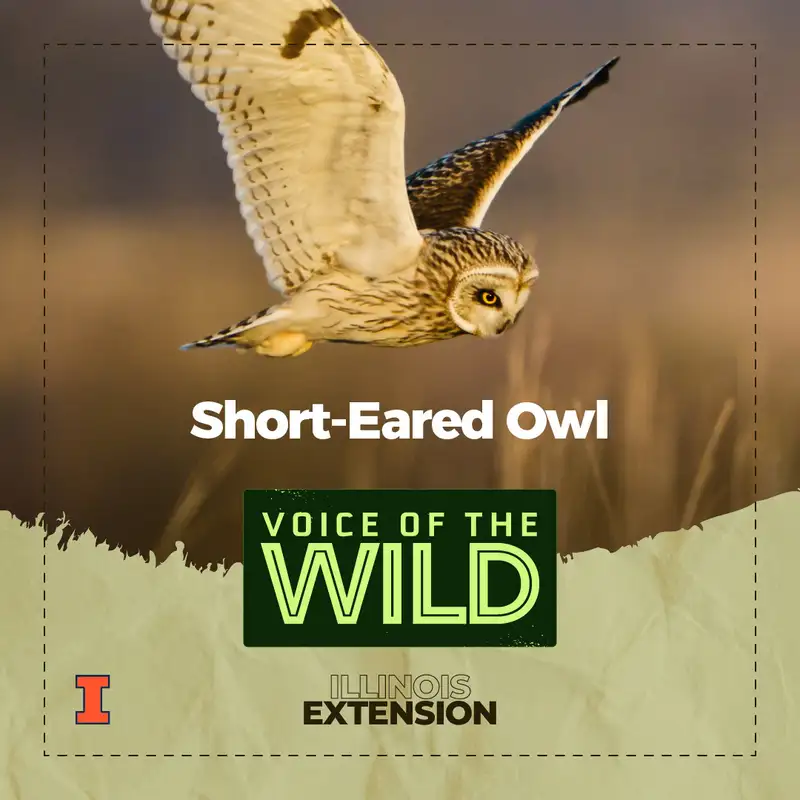
An unusual owl who’s flopping and buoyant flight might be seen above a winter prairie just as the sun sets. They’re crepuscular rather than nocturnal, so they’re most active in the dim light between night and day; though may be seen during the day if voles are particularly active or if they’re startled from their roost, often a tall patch of grass or a weedy ditch. This is the short-eared owl.
While their name is not a misnomer, it is perhaps a little misleading; their ear tufts are so short you’re unlikely to even see them. A better name may have been moth-owl, as their buoyant flight that bobbs with every wingbeat is often said to look like that of large moth. They share both habits and habitat with Northern Harriers and can be differentiated from them by that mothlike flight, their big head, and a comparatively short tail. Aside from a few short barks they might give while hunting, most of the short-eared owl’s sounds are reserved for their breeding displays in the far north, including their unusual wing-clicking. Here’s the short-eared owl again.
Thank you to the Macaulay library at the Cornell lab for today’s sound. Learn more about voice of the wild at go.illinois.edu/VOW
Listen to Voice of the Wild using one of many popular podcasting apps or directories.